


GLP-1 medications are reshaping the weight-loss industry.
Unlike diet fads and supplements, these drugs have been put through serious clinical trials, and the results speak for themselves. People are dropping significant weight, improving their health, and gaining years on their life.
The downside? They typically come in the form of a needle and syringe, which many people find intimidating or downright unappealing. That has opened the door for the “GLP-1 patch,” marketed as a needle-free alternative.
When I look at how these patches are marketed, I can see why people are drawn in.
But do these patches actually contain GLP-1s, and do they actually work? In short… no.
🚨 Why We Don’t Recommend GLP-1 Patches
We do not recommend GLP-1 patches. Despite the marketing, these patches do not contain any real GLP-1 medications like semaglutide or tirzepatide. Instead, they are made from herbal blends and vitamins with no clinical evidence supporting weight loss or metabolic benefits. They are a misleading alternative that cannot match the proven effectiveness of FDA-approved GLP-1 treatments.
If you’re looking for real, safe, and effective options, check out our guide on the top-trusted online GLP-1 clinics with proven results.
- Clinically Proven Medications: Real GLP-1s like semaglutide and tirzepatide.
- Backed by Science: FDA-approved treatments with peer-reviewed evidence.
- Trusted Providers: Transparent programs with expert-led care.
- Comprehensive Support: Ongoing care, resources, and lifestyle guidance.
What Are GLP-1 Patches?

GLP-1 patches are skin-based treatments that promise the same results as injectable GLP-1s without needles and at a lower price. I understand the temptation. For anyone who feels overwhelmed by injections or can’t afford real medications, the idea of a patch can feel less like advertising and more like a lifeline.
Here’s where things get tricky: GLP-1 patches don’t contain any actual GLP-1 medications at all. They’re simply a cocktail of supplements, and they are not a replacement for actual GLP-1s.
Traditional GLP-1 medicines are usually injected only once a week. If you’re uneasy about giving yourself a shot, a needle-free alternative might sound like the easier choice. No syringes, no pens, just a patch on your skin releasing ingredients throughout the day.
The question is whether that convenience comes with proven benefits and whether these patches are as safe as they look.
How GLP-1 Patches Claim to Work
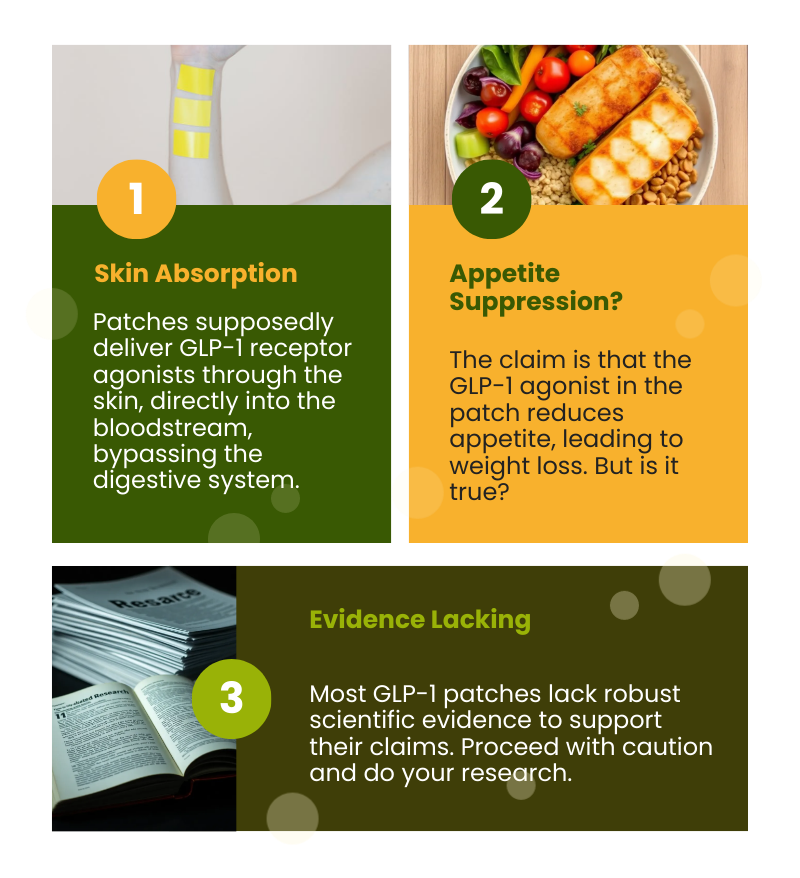
Patches are easy to use: You place one on your skin and the ingredients absorb into the bloodstream. This process is called transdermal delivery.[1] It’s the same method used for nicotine and birth control patches.
In theory, transdermal delivery can be effective, but it depends on the substance. Small, fat-soluble molecules (like nicotine) can pass through the skin fairly easily.
Larger peptide-based compounds, like GLP-1 medications, cannot get through without special technology like microneedles or chemical enhancers.[2]
Interestingly, a 2025 mouse study did test an experimental semaglutide patch and found it caused weight loss and boosted metabolism compared with injections.[3]
That proves it’s possible in the lab with advanced tech, but it’s a far cry from the supplement-style “GLP-1 patches” sold online today, which don’t contain semaglutide and have never been through clinical trials.
One major flaw is that while GLP-1 patches claim to work through the skin, there is no strong evidence that their ingredients are absorbed in amounts that meaningfully affect appetite, blood sugar, or weight loss.
🚨 Don’t Waste Money on GLP-1 Patches
We completely understand why people look for “natural” alternatives to prescription drugs. The idea of avoiding injections and big pharma can feel safer and more appealing. Unfortunately, GLP-1 patches are not a real alternative. They only contain herbal blends or vitamins with zero clinical evidence that they help with weight loss or metabolic health. They don’t include actual GLP-1 medications like semaglutide or tirzepatide, the only ingredients proven to work.
The good news: trusted online clinics make it simple, safe, and transparent to access real GLP-1 care. You’ll work with licensed providers, get clear pricing, and receive ongoing support. You don’t need to worry about hidden agendas or unsafe products.
If you’re curious about where to start, check out our guide to the best online GLP-1 programs.
- Safe & Trusted: Care led by licensed medical professionals.
- Transparent Pricing: Know exactly what you’re paying for — no surprises.
- Proven Results: Real GLP-1 medications backed by science.
- Support Beyond Prescriptions: Guidance on lifestyle, nutrition, and next steps.
GLP-1 Patches Compared to Injections
So how do patches measure up to the real thing? Here’s a quick glance:
| Feature | Injections | Patches |
|---|---|---|
| Approval status | ✅ FDA approved | ❌ Not FDA approved |
| Contains actual GLP-1 receptor agonist | ✅ Yes | ❌ No |
| Dosing frequency | Weekly | Daily or varies |
| Absorption reliability | High | Variable |
| Clinical data | Extensive | Limited |
| Side effects profile | Known | Emerging |
| Cost & insurance coverage | $199+/month; sometimes covered | $15/month; cash-pay |
Do GLP-1 Patches Contain GLP-1s?
Despite the name, GLP-1 patches do not contain prescription drugs like semaglutide (Wegovy, Ozempic) or tirzepatide (Mounjaro, Zepbound®).
True GLP-1 (glucagon-like peptide-1) medications are synthetic peptide hormones that mimic the body’s own GLP-1, a natural hormone that regulates appetite, blood sugar, and digestion.[4]
By contrast, patches often contain blends of herbal extracts, vitamins, amino acids, or stimulants marketed as “supporting metabolism” or “boosting natural GLP-1 levels.” This makes them dietary supplements rather than medications.[5]
Unlike GLP-1 drugs, patches aren’t subject to FDA approval. Supplements are regulated but by a very different set of rules. Companies have to make sure their products are safe and labeled correctly, but they don’t have to prove the supplements work or even guarantee full safety before selling them.[6]
Common Ingredients in GLP-1 Patches
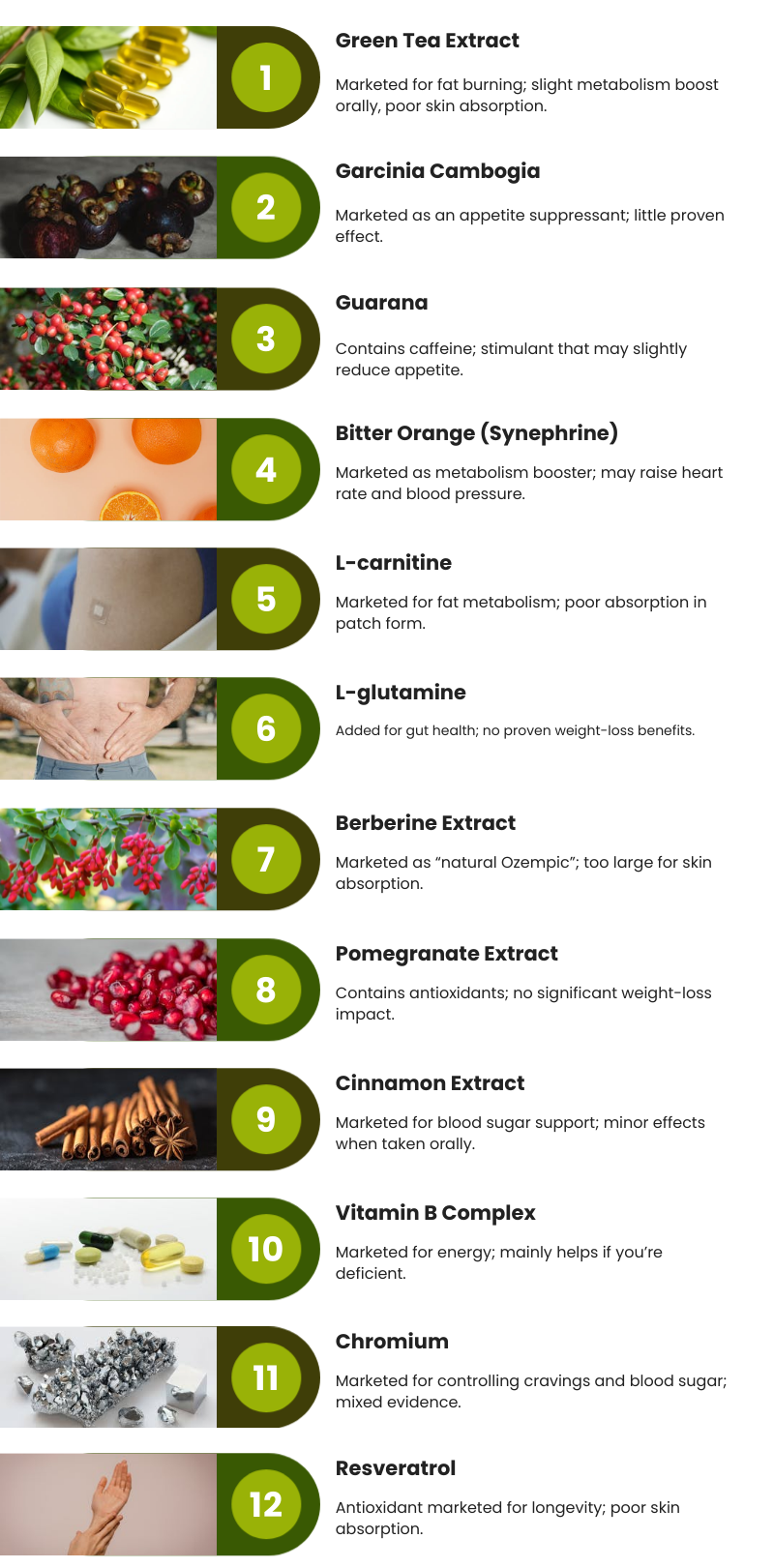
When I reviewed the labels of leading GLP-1 patches on the market, I discovered that they’re actually filled with ingredients often found in weight-loss teas, pills, or powders.
Most Common Ingredients
- Green tea extract: added for “fat burning”; slight metabolism boost when taken orally, poor skin absorption[7]
- Garcinia cambogia: marketed as an appetite suppressant; studied for cravings, little proven effect[8]
- Guarana: included for energy; contains caffeine and acts as a stimulant; may help suppress appetite[9]
- Bitter orange (synephrine): pitched as a metabolism booster; carries risks of increased heart rate and blood pressure[10]
- L-carnitine: marketed for fat metabolism; supports energy production, poor absorption in patch form[11]
- L-glutamine: added for gut health; may help maintain the gut lining when taken orally, no weight benefit[12]
- Berberine extract: promoted as “natural Ozempic”; may help lower glucose levels, too large for skin delivery[13]
- Pomegranate extract: marketed for antioxidants; provides polyphenols when taken orally, no significant weight loss impact[14]
- Cinnamon extract: included for blood sugar support; minor glucose effects when taken orally[15]
- Vitamin B complex: added for “energy” and benefits on metabolism; may only help in people who are deficient[16]
- Chromium: promoted for cravings and glucose regulation, evidence is mixed[17]
- Resveratrol: added for longevity benefits; works as an antioxidant orally at high doses but with poor absorption[18]
Unfortunately, none of these ingredients has been proven to affect GLP-1 activity. Many of them have been used in weight-loss teas, pills, and powders for decades, in some cases even longer than GLP-1 medications, yet they have never caused a true breakthrough in weight-loss treatment.
Putting them into a patch does not change that, and it risks creating the illusion that they are connected to GLP-1 science when they are not.
🚨 Bottom Line
None of the ingredients commonly found in “GLP-1 patches” such as green tea extract, garcinia cambogia, guarana, bitter orange, berberine, and others have been proven to affect GLP-1 activity. Many of these compounds have been sold for decades in teas, powders, and pills with little to no meaningful impact on weight loss. Putting them into a patch does not make them more effective, and in most cases the skin can’t even absorb these ingredients properly.
The real concern I have is the marketing. By calling these products “GLP-1 patches,” companies create the illusion that they are linked to GLP-1 science. In reality, they contain no semaglutide, tirzepatide, or any other medication that is FDA-approved for weight loss. At best, you will experience the same minimal effects these supplements have always had. At worst, you waste money and experience unintended side effects.
The proven option: if you want safe and effective results, online GLP-1 clinics provide access to real medications prescribed by licensed providers. These programs are transparent, trustworthy, and focused on long-term success rather than marketing gimmicks.
See our full breakdown of the best online GLP-1 programs to understand your options.
- Clinically Proven: Real GLP-1 medications such as semaglutide and tirzepatide.
- Expert-Led Care: Licensed medical providers guide your treatment.
- Transparent Pricing: Clear costs with no tricks or hidden fees.
- Comprehensive Support: Medical guidance plus lifestyle and nutrition resources.
Comparing Claims to Reality
Swipe right on mobile to scroll the table below.
| Ingredient | Patch claims | Evidence quality | Reality |
|---|---|---|---|
| Berberine extract | “Supports GLP-1 production, reduces cravings” | Moderate (for oral use only) | Effective orally at 500–1500 mg daily, but patches don’t disclose dosage and transdermal absorption is questionable |
| Bitter orange (synephrine) | Energy and appetite booster | weak; no proven weight loss | Likely ineffective for weight loss and may raise blood pressure or heart rate |
| Chromium | “Regulates blood sugar, reduces cravings” | Mixed (inconsistent results) | Some studies show benefits but the effective dose is 200–400 mcg, patches likely contain much less |
| Cinnamon extract | “Enhances insulin sensitivity, stabilizes blood sugar” | Poor (minimal effect) | Tiny effect on blood sugar, equivalent to adding cinnamon to your coffee |
| Garcinia cambogia | Energy and appetite booster | Weak; no proven weight loss | Likely ineffective for weight loss and carries potential liver toxicity risks and other adverse effects |
| Green tea extract | Metabolism and fat-burning booster | Moderate (lots of RCTs, inconsistent results) | Little to no meaningful weight loss; benefits are minor and often tied to caffeine; high doses may cause liver toxicity |
| Guarana | Energy and metabolism booster | Low–moderate (confounded by caffeine) | Effects come from caffeine; may slightly raise metabolism but no proven weight loss; risk of insomnia, anxiety, high blood pressure, and heart arrhythmias at high doses |
| L-carnitine | Fat burner, metabolism booster | Moderate (many RCTs, mixed results) | May cause very small weight loss (~1–2 kg) in some trials; not clinically meaningful. Safe at normal doses but can raise TMAO (potential CV risk) |
| L-glutamine | “Supports muscle preservation during weight loss” | Poor (for weight-loss claims) | Helps with muscle recovery, but won’t prevent muscle loss from calorie restriction |
| Pomegranate extract | “Antioxidant benefits, supports metabolism” | Weak (general antioxidant only) | Good antioxidant but no proven weight-loss effects, you’d get more from eating actual pomegranates |
| Vitamin B complex | “Boosts metabolism, converts food to fuel” | Good (for deficiencies only) | Most UK adults get adequate B vitamins from diet, won’t boost metabolism unless deficient |
| Resveratrol | Metabolism activator, fat burner, “longevity” | Low–moderate (small human trials, many animal studies) | No proven effect on weight loss; may modestly improve insulin sensitivity and cholesterol; generally safe at supplement doses but not a fat-burner |
Do GLP-1 Patches Actually Work?
With semaglutide delivering up to 15% weight loss in clinical trials and tirzepatide reaching 20% or more, alongside significant A1C improvements, it is no surprise patch companies want in.[19][20]
Those A1C drops matter. Lowering average blood sugar by even one point makes diabetes easier to manage, cuts the risk of long-term complications, and can even prevent type 2 diabetes in people who lose weight early enough.[21]
GLP-1s work by helping the body in four ways: they boost insulin when blood sugar rises, slow stomach emptying, cut back the sugar the liver makes, and signal the brain that you’re full.[22] Together, these effects lower blood sugar and drive weight loss.
These drugs have been studied for more than 30 years, with dozens of large clinical trials proving they are both safe and effective.[23]
In contrast, patches only appeared in 2025. They’re sold as supplements, not prescriptions, and usually contain herbs, vitamins, or stimulants. The idea is that ingredients soak through your skin to boost natural GLP-1, but while that works for small molecules like nicotine, it doesn’t work for large peptide drugs like GLP-1s.
Because GLP-1 patches don’t contain real GLP-1 medications and haven’t been studied in diabetes, they should not be considered a treatment for blood sugar control.
Patches might sound like a great idea, but right now that’s all they are, an idea without proof. Be cautious with anything marketed as a “natural GLP-1” or miracle patch. These products are hype, not healthcare.
How Safe Are GLP-1 Patches?

Since GLP-1 patches aren’t FDA approved, there’s no guarantee of quality or consistency, and they haven’t been tested in clinical trials, so there’s no long-term safety data.
For now, they remain completely unproven.
Side Effects of GLP-1 Patches
Since patches haven’t been widely tested, the only clues we have about possible risks come from the supplement ingredients they contain:
Possible side effects
- L-carnitine: nausea, diarrhea, “fishy” odor[24]
- Glutamine: bloating[12]
- Berberine: stomach upset, nausea, constipation[25]
- Pomegranate: digestive issues[26]
- Resveratrol: digestive issues, headaches[27]
- B-vitamins: flushing, nerve irritation at high doses[28]
- Chromium: mood changes, insomnia, headaches[29]
More serious risks
- L-carnitine: may raise TMAO levels linked to heart disease[30]
- High-dose glutamine: may worsen seizures[31]
- Berberine: interacts with many prescription drugs; unsafe in pregnancy or breastfeeding[25]
- Cinnamon: may worsen low blood sugar with diabetes medications[32]
- Chromium: rare cases of liver and kidney damage at high doses[33]
- Resveratrol: may thin blood, added risk with anticoagulants[34]
Risks of GLP-1 Patches
The biggest risk is that absorption is unpredictable.
Small molecules like nicotine can move through skin, but larger ones usually cannot. That means many patch ingredients may never reach your bloodstream. If they do, the dose is unknown.[35]
On top of that, labels may not match what’s actually inside, and since supplement patches don’t require the same oversight as prescriptions, there’s no way to be sure the dose, purity, or even the listed ingredients are accurate.[6]
At best, the patch does nothing. At worst, you are taking in risky ingredients without any medical oversight.
How Expensive Are GLP-1 Patches?
GLP-1 patches generally cost between $15 and $40 per month, depending on the brand and bundle size.
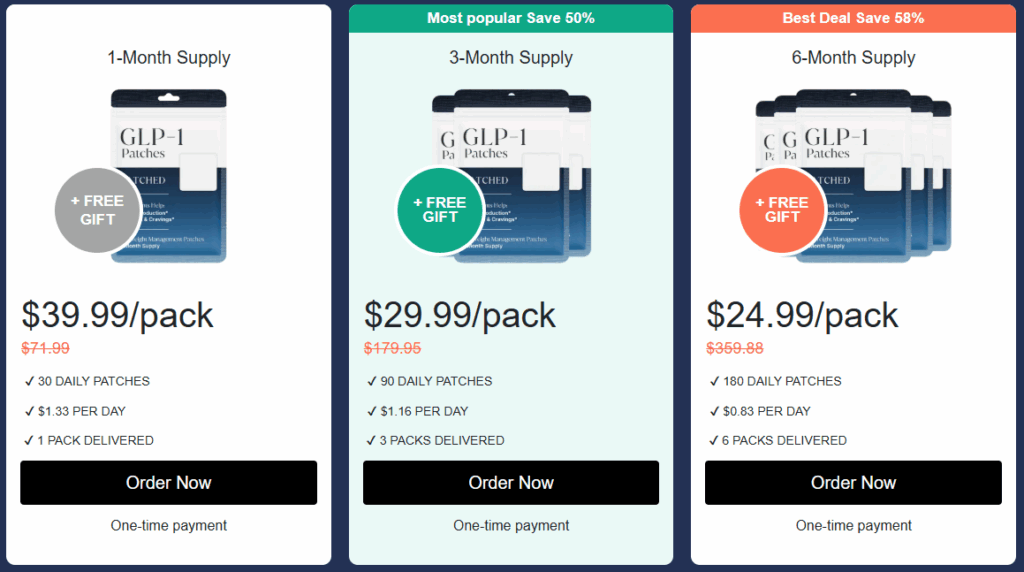
Estimated Monthly Cost
- On the low end: Kind Patches at $15 per month
- On the high end: Patched at $71.99 with a current discount of $39.99 per month
Most companies offer bundle deals that bring the monthly price down if you commit to buying several packs at once. Just keep in mind that these “discounts” are based on inflated regular prices, so the savings may not be as dramatic as they look.
See our full breakdown of Kind GLP-1 Patch pricing.
How Long Do You Stay on GLP-1 Patches?
Most people would treat patches like a daily supplement, which means one patch a day.
Over time, the costs add up:
| Duration | Estimated total cost |
|---|---|
| 1 month | $15–$25 |
| 3 months | $45–$75 |
| 6 months | $90–$150 |
| 12 months | $180–$300 |
Patches may look affordable compared to prescription GLP-1 medications, which can cost hundreds or even thousands of dollars each month. But since patches aren’t proven to work, even a few hundred dollars a year may go with little to show for it.
Will Insurance Cover GLP-1 Patches?
Since GLP-1 patches are sold over the counter as dietary supplements, insurance does not cover them. Health plans don’t consider them a medical treatment, unlike FDA-approved drugs that have regulatory backing for coverage.
Can You Use Your FSA or HSA
According to IRS rules, FSA and HSA funds can’t be used for dietary supplements, including GLP-1 patches, unless a doctor prescribes them for a diagnosed medical condition. Even with a letter of medical necessity, most administrators will still deny reimbursement. Read our complete guide here.
Why People Turn to Patches
For many, GLP-1 patches represent hope. The longing for something simpler and more affordable is real, and that is what gives these patches so much appeal.
I have seen that hope firsthand with loved ones who were excited about the possibility of a less expensive and less daunting alternative. It is always a huge letdown when they ask me if the patches work and I have to explain that there is no clinical evidence behind them.
It is easy to understand why so many people want something that feels less intimidating, with fewer side effects, and easier to fit into daily life. That longing is genuine and valid.
What is difficult is having to let people down by telling them the truth. Even harder is watching that hope be taken advantage of, which is why having clear and accurate information matters so much.
Tips If You’re Considering GLP-1 Patches:
If you are curious about patches, here are a few things to keep in mind:
✅ Check the label. Look for exact ingredient amounts, not just “proprietary blends.” Lack of dosage transparency is a red flag.
✅ Cross-check interactions. Ingredients like berberine and synephrine can interact with common medications or raise blood pressure.
✅ Track results objectively. If you do try a patch, be sure to log weight, blood sugar, side effects, and energy levels so you can see if it is doing anything at all.
✅ Know the cost trade-off. Even $15 a month adds up. Multiply by a year before deciding if it is worth gambling on.
✅ Talk to a provider. A doctor or pharmacist can tell you if the patch ingredients are safe with your medications or health conditions.
These tips can help you navigate and stay safe. What matters most is protecting your health while you continue searching for options that genuinely support your well-being.
Final Verdict
GLP-1 patches may seem convenient, but the truth is they do not contain real GLP-1 medications, they are not FDA approved, and they have never been proven to work in humans.
At best, these patches act like supplements with questionable absorption. At worst, they drain money on hype while exposing people to risks without providing any real medical benefit. It is highly unlikely that any patch on the market today will deliver the same life-changing effects of GLP-1 medications.
I hold on to the hope that one day proven human trials will lead to real GLP-1 patches that can safely deliver what so many are searching for.
Until then, if you are looking for evidence-based injection alternatives, providers like Shed offer lozenges and oral drops, with an optional premium coaching package that includes one-on-one coaching, nutrition, fitness, and mental health support.
🚨 Looking For a Proven Weight Loss Solution?
Read our article on the Best GLP-1 Programs to find a trusted provider that offers real, clinically proven treatment.
- Expert-led care: Work directly with GLP-1 specialists.
- Transparent pricing: No hidden fees or surprise bills.
- Responsive support: Fast, friendly help when you need it.
- Flexible treatment: Injections, creams, or oral meds tailored to you.
Our Reviews of Popular GLP-1 Alternatives
Curious to learn more? Check out our other articles where we review popular “natural GLP-1 alternatives” like patches and gummies:
FAQs
Is there a GLP-1 patch?
Yes, products are sold as “GLP-1 patches,” but they do not contain prescription GLP-1 medications such as Ozempic, Wegovy, or Mounjaro. Instead, they are supplement patches made with herbal extracts, vitamins, or stimulants. These patches are not FDA approved, have never been tested in clinical trials, and are completely different from real GLP-1 injections. Approach them with caution.
Do weight loss GLP-1 patches really work?
No. Prescription GLP-1 drugs such as Ozempic, Wegovy, and Mounjaro are synthetic peptide hormones proven in decades of research and large clinical trials to lower blood sugar and support significant weight loss. GLP-1 patches are different. They are sold as supplements with ingredients like herbs, caffeine, or vitamins. No studies show that these patches actually work for promoting weight loss or improving metabolic health.
Can GLP-1 patches help with diabetes?
There is no clinical evidence that GLP-1 patches help with diabetes. While some contain ingredients like berberine or chromium, these only show limited blood sugar effects when taken orally in proper doses. GLP-1 patches have never been tested for diabetes treatment. If you have diabetes, do not view patches as a substitute for prescription GLP-1 medications that are proven to lower A1c and reduce complications.
What’s the main difference between GLP-1 patches and GLP-1 injections?
GLP-1 injections contain real medications such as semaglutide and tirzepatide. These drugs are FDA approved and backed by decades of research showing they lower blood sugar and support significant weight loss. GLP-1 patches are different. They are sold as supplements made with herbs, vitamins, or amino acids. They do not contain GLP-1 drugs and have never been proven effective in clinical trials.
Could any of the ingredients in GLP-1 patches actually help with weight loss?
Some patch ingredients, such as green tea extract or berberine, may support metabolism or appetite control when taken orally in the right dose. Research on these compounds is mixed, but they can have small effects in supplement form.
The problem is delivery. GLP-1 patches don’t guarantee those ingredients absorb through the skin. Any possible benefit seen with pills or powders has not been shown with patches.
Will research ever lead to a real GLP-1 patch?
Researchers are exploring whether drugs like semaglutide could one day be delivered through the skin. Early studies with microneedle patches in animals show promise, but the science is still in its early stages.
Right now, no GLP-1 patch has FDA approval. The products sold today don’t contain real GLP-1 drugs, and more research is needed before a true GLP-1 patch could ever be available.
Sources
- Alkilani, A. Z., McCrudden, M. T., & Donnelly, R. F. (2015) Transdermal drug delivery: Innovative pharmaceutical developments based on disruption of the barrier properties of the stratum corneum. Pharmaceutics, 7(4), 438–70. https://doi.org/10.3390/pharmaceutics7040438
- Kalluri, H., & Banga, A. K. (2011). Transdermal delivery of proteins. AAPS PharmSciTech, 12(1), 431–41. https://doi.org/10.1208/s12249-011-9601-6
- Li, W., Cai, R., Yin, B., Zhou, Y., Dong, X., Li, W., & Wen, J. (2025). Transdermal semaglutide administration in mice: Reduces body weight by suppressing appetite and enhancing metabolic rate. Biology, 14(5), 575. https://doi.org/10.3390/biology14050575
- Cleveland Clinic. (n.d.) GLP-1 agonists. https://my.clevelandclinic.org/health/treatments/13901-glp-1-agonists
- US Food and Drug Administration. (2024) Questions and answers on dietary supplements. https://www.fda.gov/food/information-consumers-using-dietary-supplements/questions-and-answers-dietary-supplements
- US Food and Drug Administration. (2024). Dietary supplements. https://www.fda.gov/food/dietary-supplements
- Radeva-Ilieva, M., Stoeva, S., Hvarchanova, N., & Georgiev, K. D. (2025). Green tea: Current knowledge and issues. Foods, 14(5), 745. https://doi.org/10.3390/foods14050745
- Maunder, A., Bessell, E., Lauche, R., Adams, J., Sainsbury, A., & Fuller, N. R. (2020). Effectiveness of herbal medicines for weight loss: A systematic review and meta-analysis of randomized controlled trials. Diabetes, Obesity and Metabolism, 22(6), 891–903. https://doi.org/10.1111/dom.13973
- Temple, J. L., Bernard, C., Lipshultz, S. E., Czachor, J. D., Westphal, J. A., & Mestre, M. A. (2017). The safety of ingested caffeine: A comprehensive review. Frontiers in Psychiatry, 8, 80. https://doi.org/10.3389/fpsyt.2017.00080
- Koncz, D., Tóth, B., Bahar, M. A., Roza, O., & Csupor, D. (2022). The safety and efficacy of citrus aurantium (bitter orange) extracts and p-synephrine: A systematic review and meta-analysis. Nutrients, 14(19), 4019. https://doi.org/10.3390/nu14194019
- Fredrick, F., Aggarwal, K., Reddy Meda, A. K., Anamika, F., Singla, A., Jain, P., & Jain, R. (2025). Carnitine: Its crucial role in metabolic health and cardiovascular function. Journal of Dietary Supplements, 22(5) 664–679. https://doi.org/10.1080/19390211.2025.2530243
- Zhou, Q., Verne, M. L., Fields, J. Z., Lefante, J. J., Basra, S., Salameh, H., & Verne, G. N. (2019). Randomized placebo-controlled trial of dietary glutamine supplements for postinfectious irritable bowel syndrome. Gut, 68(6), 996–1002. https://gut.bmj.com/content/68/6/996
- Liu, D., Zhao, H., Zhang, Y., Hu, J., & Xu, H. (2025). Efficacy and safety of berberine on the components of metabolic syndrome: a systematic review and meta-analysis of randomized placebo-controlled trials. Frontiers in Pharmacology, 16, 1572197. https://doi.org/10.3389/fphar.2025.1572197
- Hosseini, B., Saedisomeolia, A., Wood, L. G., Yaseri, M., & Tavasoli, S. (2016). Effects of pomegranate extract supplementation on inflammation in overweight and obese individuals: A randomized controlled clinical trial. Complementary Therapies in Clinical Practice, 22, 44–50. https://doi.org/10.1016/j.ctcp.2015.12.003
- Yazdanpanah, Z., Azadi-Yazdi, M., Hooshmandi, H., Ramezani-Jolfaie, N., & Salehi-Abargouei, A. (2020). Effects of cinnamon supplementation on body weight and composition in adults: A systematic review and meta-analysis of controlled clinical trials. Phytotherapy Research, 34(3), 448–463. https://doi.org/10.1002/ptr.6539
- Hanna, M., Jaqua, E., Nguyen, V., & Clay, J. B. (2022). Vitamins: Functions and uses in medicine. Permanente Journal, 26(2), 89–97. https://doi.org/10.7812/TPP/21.204
- Vajdi, M., Safaei, E., Moeinolsadat, S., Mousavi, S., Seyedhosseini-Ghaheh, H., Abbasalizad-Farhangi, M., & Askari, G. (2024). Effects of chromium supplementation on body composition in patients with type 2 diabetes: A dose-response systematic review and meta-analysis of randomized controlled trials. Journal of Trace Elements in Medicine and Biology, 81, 127338. https://doi.org/10.1016/j.jtemb.2023.127338
- Ren, Z. Q., Zheng, S. Y., Sun, Z., Luo, Y., Wang, Y. T., Yi, P., Li, Y., Hueng, C., & Xiao, W. F. (2025). Resveratrol: Molecular mechanisms, health benefits, and potential adverse effects. MedComm, 6(6), e70252. https://doi.org/10.1002/mco2.70252
- Wilding, J. P. H., Batterham, R. L, Calanna, S., Davies, M., Van Gaal, L. F., Lingvay, I., McGowan, B. M., Rosenstock, J., Tran, M. T. D., Wadden. T. A, Wharton, S., Yokote, K., Zeuthen, N., & Kushner, R. F. (2021). Once-weekly semaglutide in adults with overweight or obesity. New England Journal of Medicine, 384(11), 989–1002. https://doi.org/10.1056/NEJMoa2032183
- Popoviciu, M. S., Păduraru, L., Yahya, G., Metwally, K., & Cavalu, S. (2023). Emerging role of GLP-1 agonists in obesity: a comprehensive review of randomized controlled trials. International Journal of Molecular Sciences, 24(13), 10449. https://doi.org/10.3390/ijms241310449
- Fralick, M., Colacci, M., Odutayo, A., Siemieniuk, R., & Glynn, R. J. (2020). Lowering of hemoglobin A1C and risk of cardiovascular outcomes and all-cause mortality, a meta-regression analysis. Journal of Diabetes and its Complications, 34(11), 107704. https://doi.org/10.1016/j.jdiacomp.2020.107704
- Horwitz, R. I., Otaka, S. N., Conroy, A. H., Cullen, M. R., Matory, A., Singer, B. H., & Sim, I. (2025). Biosocial variation in treatment response to GLP-1s: implications for clinical care and health policy. The American Journal of Medicine. https://doi.org/10.1016/j.amjmed.2025.05.016
- Drucker, D. J., Habener, J. F., & Holst, J. J. (2017). Discovery, characterization, and clinical development of the glucagon-like peptides. Journal of Clinical Investigation, 127(12), 4217–4227. https://doi.org/10.1172/JCI97233
- National Institutes of Health Office of Dietary Supplements. (2023, April 17). Carnitine. https://ods.od.nih.gov/factsheets/Carnitine-HealthProfessional/
- Cleveland Clinic. (2025, June 10). Berberine: What it is, benefits and side effects. https://health.clevelandclinic.org/berberine
- National Center for Complementary and Integrative Health. (2025, April) Pomegranate. https://www.nccih.nih.gov/health/pomegranate
- Cleveland Clinic. (2022, January 25). Health benefits of resveratrol—and should you take it? https://health.clevelandclinic.org/resveratrol-benefits
- Cleveland Clinic. (2024, January 8). A close look at each of the B vitamins: Benefits, food sources and more. https://health.clevelandclinic.org/b-vitamin-benefits
- Drugs.com. (2025, August 6). Chromium picolinate. https://www.drugs.com/mtm/chromium-picolinate.html
- Sawicka, A. K., Renzi, G., & Olek, R. A. (2020). The bright and the dark sides of L-carnitine supplementation: A systematic review. Journal of the International Society of Sports Nutrition, 17(1). https://doi.org/10.1186/s12970-020-00377-2
- Dhaher, R., Chen, E. C., Perez, E., Rapuano, A., Sandhu, M. R. S., Gruenbaum, S. E., Deshpande, K., Dai, F., Zaveri, H. P., & Eid, T. (2022). Oral glutamine supplementation increases seizure severity in a rodent model of mesial temporal lobe epilepsy. Nutritional Neuroscience, 25(1), 64–69. https://doi.org/10.1080/1028415X.2019.1708568
- Drugs.com. (n.d.). Drug interaction report. https://www.drugs.com/interactions-check.php?drug_list=1874-1213%2C2606-0&professional=1
- National Institutes of Health Office of Dietary Supplements. (2022, June 2). Chromium. https://ods.od.nih.gov/factsheets/Chromium-HealthProfessional/
- Chiba, T., Kimura, Y., Suzuki, S., Tatefuji, T., & Umegaki, K. (2016). Trans-resveratrol enhances the anticoagulant activity of warfarin in a mouse model. Journal of Atherosclerosis and Thrombosis, 23(9), 1099–1110. https://doi.org/10.5551/jat.31765
- Supe, S., & Takudage, P. (2021). Methods for evaluating penetration of drug into the skin: A review. Skin Research and Technology, 27(3), 299–308. https://doi.org/10.1111/srt.12968


